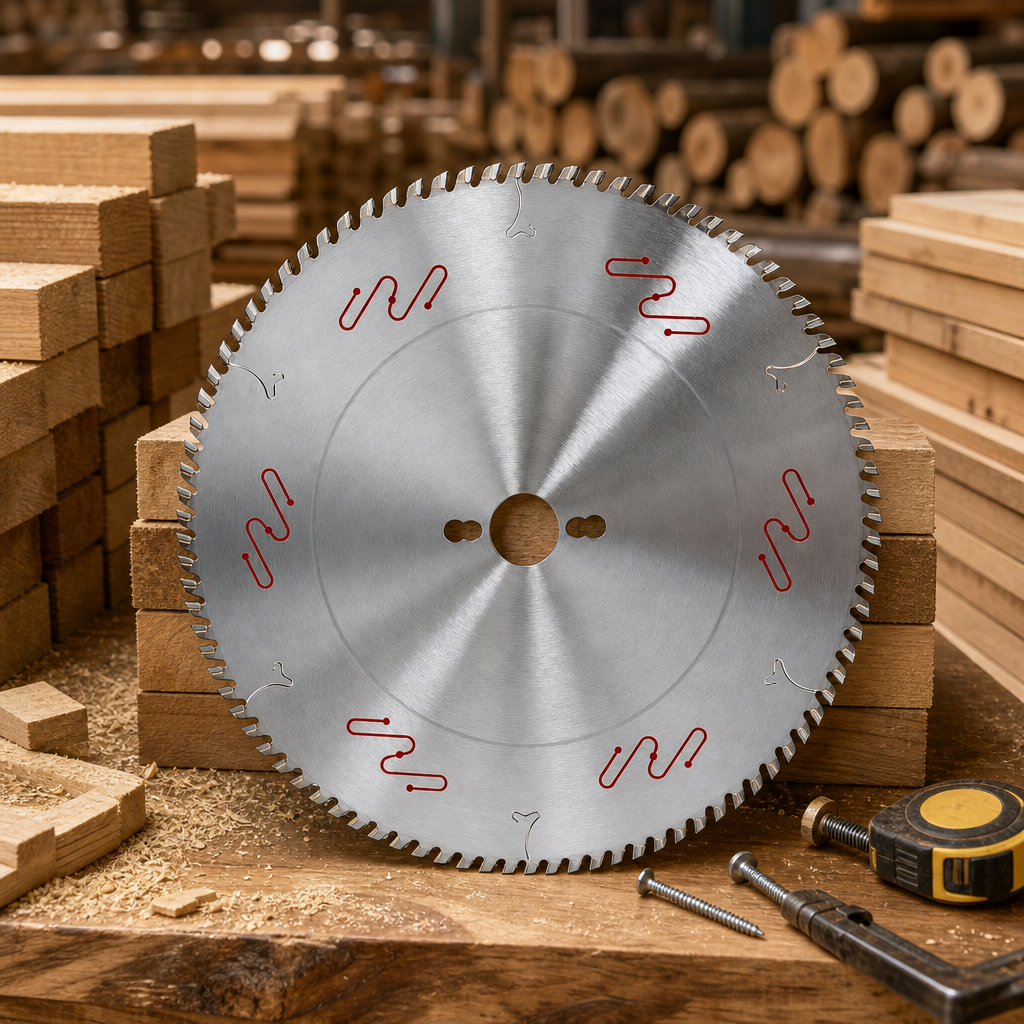
For cabinetry and furniture manufacturers cutting melamine, veneered plywood, and laminated particleboard, surface tear-out is an immediate profit drain. A chipped edge means rejected panels, extra edge-banding rework, or wasted substrate.
When tear-out occurs on the top or bottom face, the common reaction is to blame the operator or adjust feed speed. But in most panel sizing setups, the culprit is blade geometry and tooth-runout.
Laminated surfaces are brittle. Clean cutting requires a shearing action rather than an impact cut. Three factors determine whether the blade cleanly slices the face or chips it:
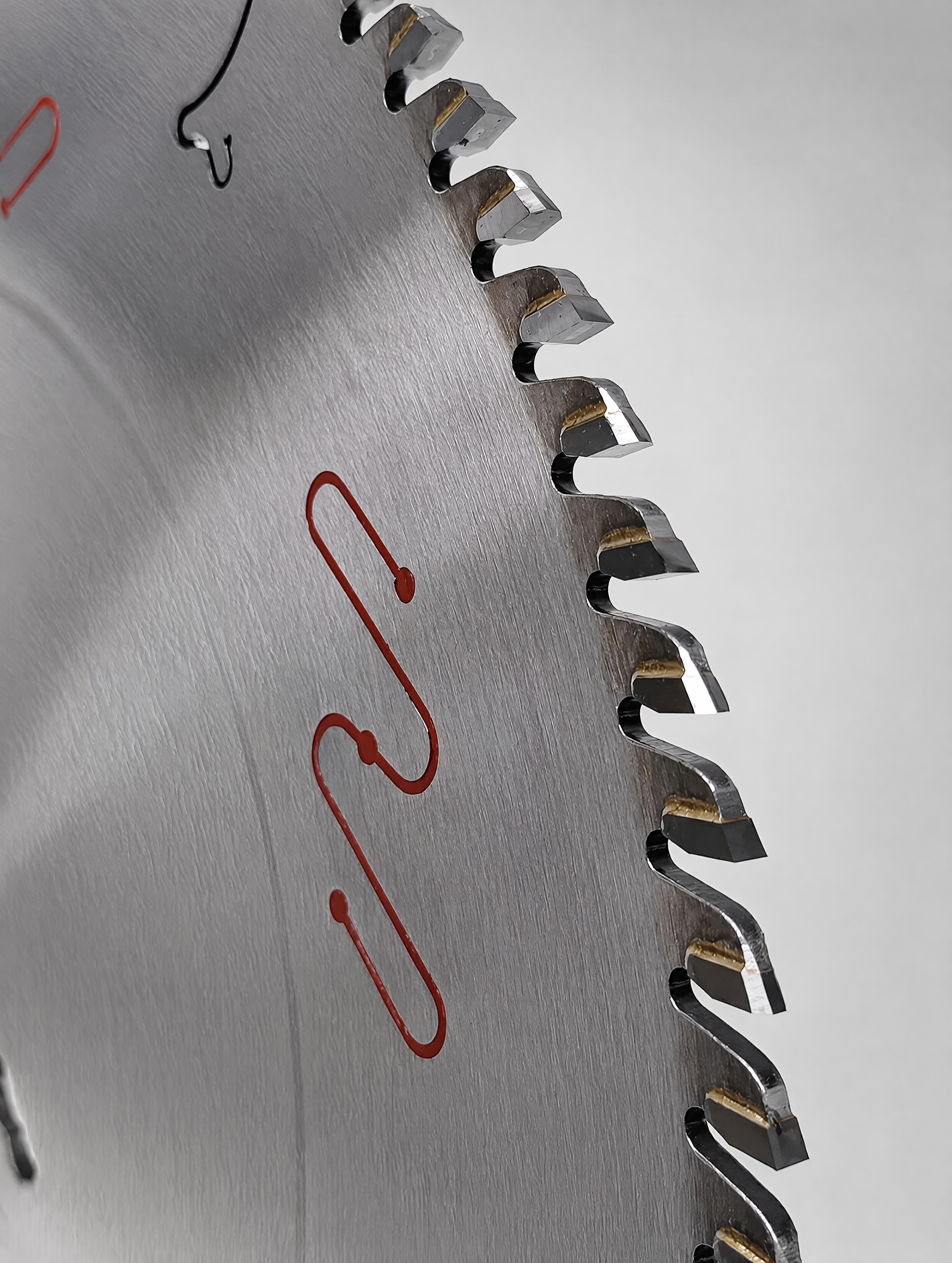
1. Alternate Top Bevel (ATB) or Triple Chip Grind (TCG) geometry. Different laminates demand specific bevel angles. A steep ATB scores the brittle surface cleanly, while a negative rake angle prevents lifting the top veneer.
2. Tooth-to-tooth height tolerance. If even two or three teeth on a 72-tooth or 96-tooth blade run taller than the rest by 0.02 mm, those teeth take excessive bite, chipping the laminate on exit.
3. Plate tensioning and runout. A blade plate that flexes under high-speed feed generates micro-deflection at the rim, resulting in ragged cut edges.
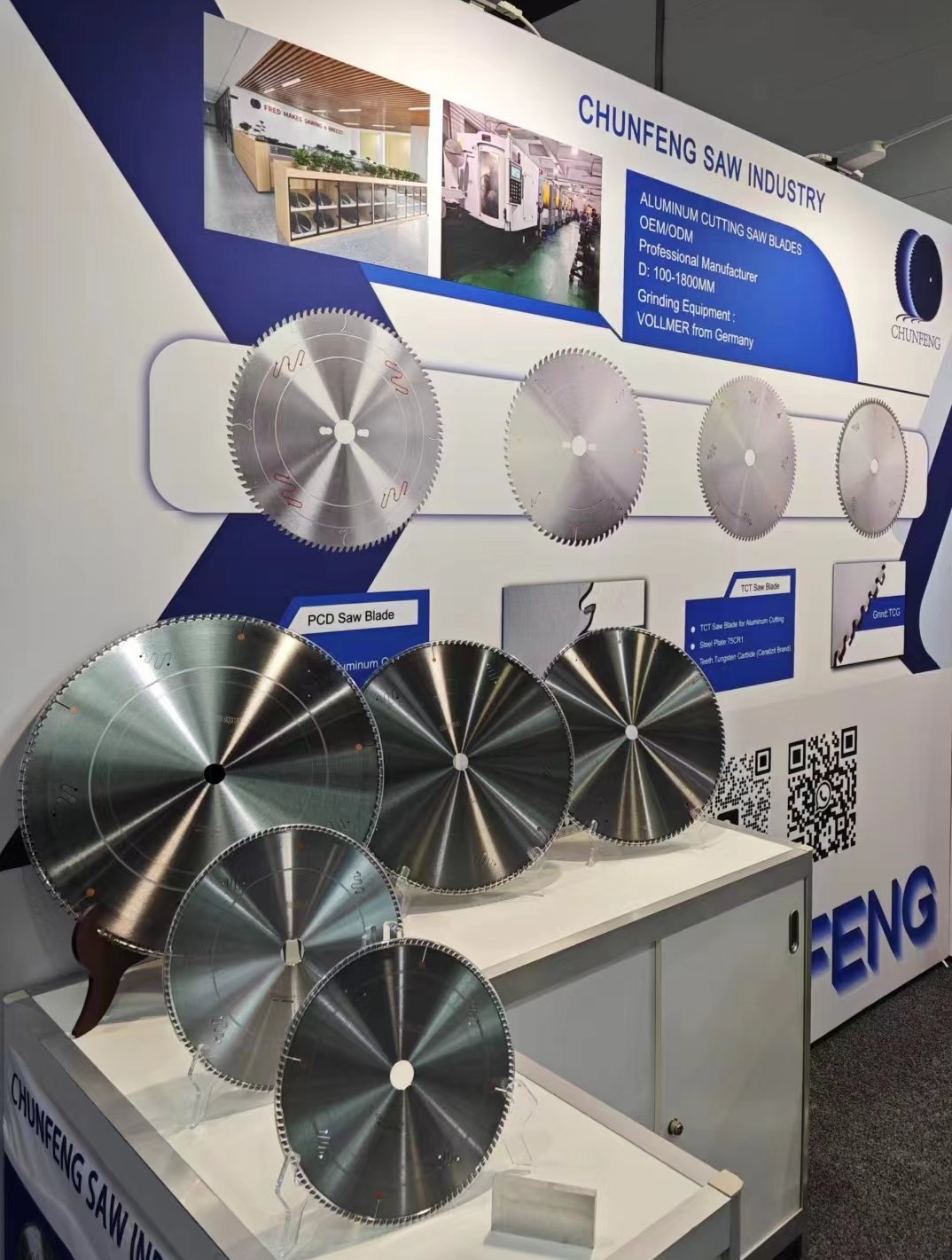
Fredsaw panel sizing blades are precision-ground on German Vollmer CNC machines. Tooth geometry and height tolerances are held to strict standards, eliminating the tooth-to-tooth variation that triggers chipping.
The result? Crisp, chip-free cuts on both single-pass table saws and industrial beam saws—minimizing secondary touch-ups and keeping production moving.